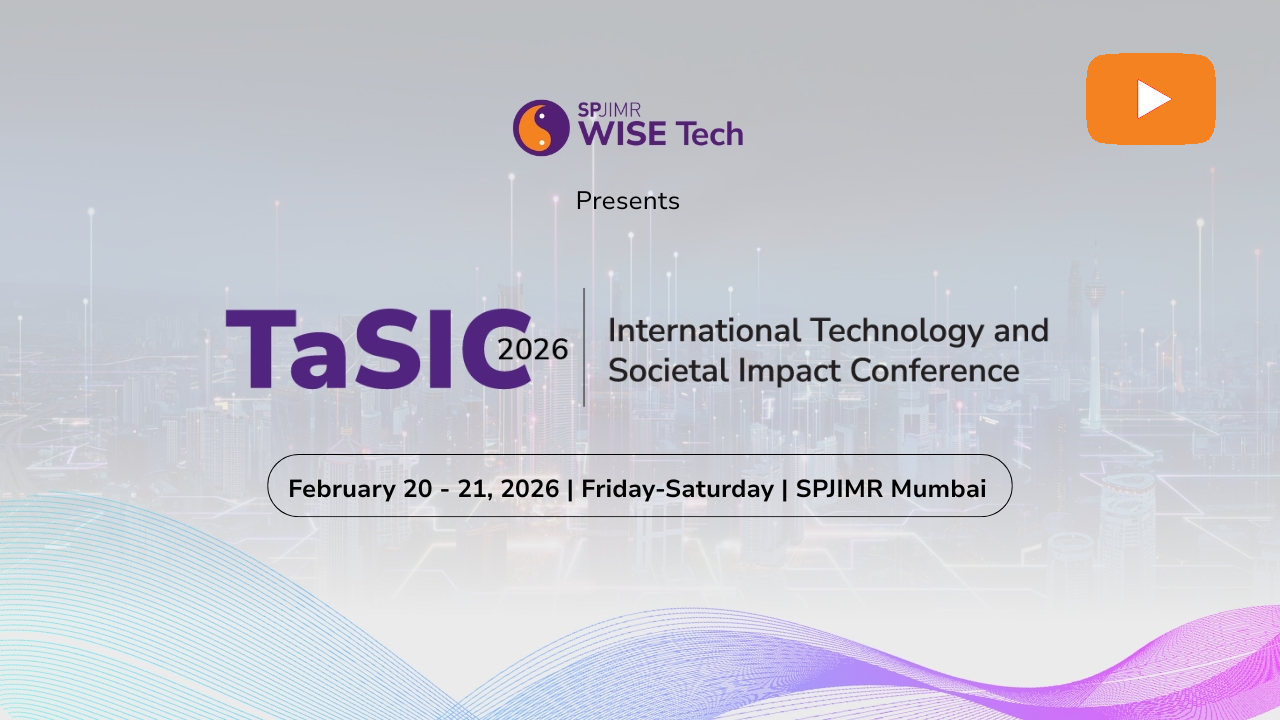
Scan to download the Conference Outline

The global management academy is reassessing how research excellence is defined, executed and evaluated. Changing expectations from societal stakeholders, alongside revised accreditation standards and impact frameworks from global bodies, mean business schools are increasingly required to demonstrate the tangible, real-world relevance and value of their intellectual contributions.
A growing body of literature argues that traditional scholarly indicators, while indispensable for verifying baseline validity, methodological rigour and theoretical advancement, are incomplete for business schools seeking to demonstrate broader relevance, legitimacy and value beyond the academic community (Barnett, 2026; Rosemann et al., 2021; Wickert et al., 2021). When academic discourse becomes too insular, it risks decoupling from the practitioners and policymakers it aims to inform.
Multi-dimensional research impact frameworks offer a starting point for understanding and bridging this gap. One such framework proposes that scholarly insights and output can create one or more of nine types of impact: two academy-centric, and seven that focus outside the academy.
Academic impact: Through traditional peer-reviewed contributions that advance theory.
Educational impact: Through case research and other pedagogical contributions that advance teaching effectiveness in MBA curricula and executive education.
By informing public policy, statutory frameworks, governmental guidelines, legislation or professional standards.
Through direct application to the management, governance, strategic direction, operational models or overall performance of commercial, public and non-profit enterprises.
By enabling new technological capability, artefact development, systems design, digital infrastructure adoption or technical standards.
By enabling entrepreneurial opportunity, start-up incubation and venture creation.
By improving sustainable economic value, regional productivity, wealth creation and shared prosperity.
By contributing to the well-being, equity, financial inclusion and overall quality of life of individuals, local communities or civil society.
By enhancing environmental sustainability, resource stewardship, carbon reduction, circular economy practices or climate resilience.
While business schools have historically optimised for academy-centric impact, the ultimate test of a school's public value, and the social legitimacy of management research, is its capacity to drive the seven dimensions of outside-academy impact.

Email: tasic_acad@spjimr.org
Location:
SPJIMR Mumbai
Bharatiya Vidya Bhavan Campus
Munshi Nagar, Dadabhai Road
Andheri West, Mumbai – 400058
 Conference outline